Eliors EAAS
Software for running a mini-grid energy business
 View website
Overview
Eliors already sells power. Panels generate it, batteries store it, and prepaid and postpaid meters bill customers for using it. What didn't exist was the software to run the business behind that hardware: onboarding a new customer, watching a battery's health from a desk instead of a site visit, knowing which recharge channel a payment came through when a customer disputes their balance. Eliors brought us in to build that layer.
The challenge
Selling energy and managing an energy business turned out to be two different problems. A few came up consistently.
- No remote visibility into generation and battery health: checking whether a mini-grid was generating enough power, or whether a battery was overdischarging, meant a field visit or a phone call to whoever was on site.
- Customer onboarding without a paper trail: meters got assigned to customers informally, without a consistent record of identity, contact details, or which meter belonged to whom.
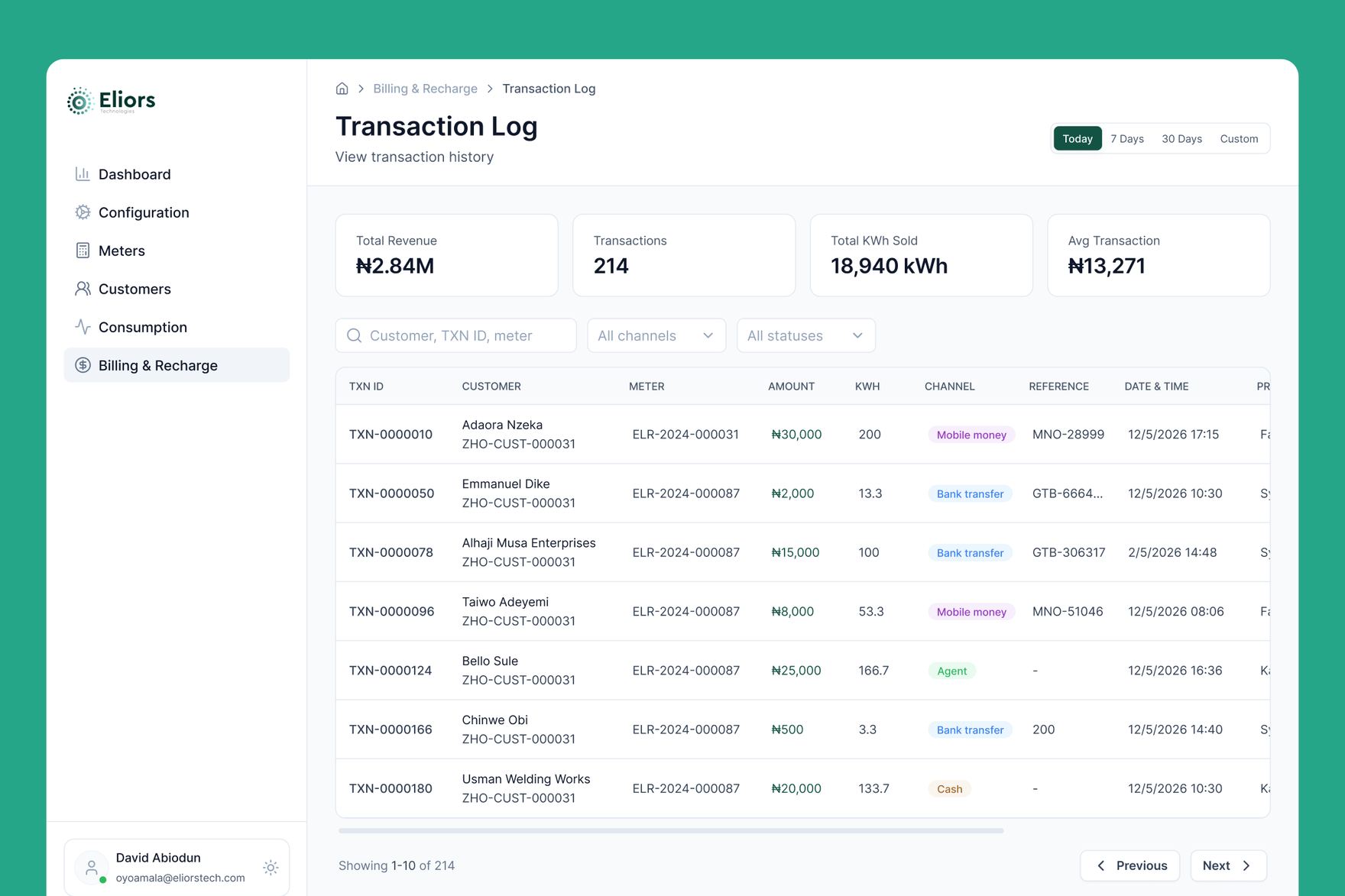
- Disconnected billing and recharge: cash, mobile money, bank transfer, and agent recharges each left their own trail, or no trail at all, making it hard to answer a simple question: did this payment go through, and where.
- Tariff complexity across customer groups: residential, commercial, and agricultural customers needed different pricing, flat rate, time-of-use, or block tariffs, applied consistently rather than negotiated case by case.
- Meter lifecycle risk: a meter can change hands when a tenant vacates or a business closes. Without a formal transfer process, usage risked getting billed to the wrong account.
Research & insights
Building this meant borrowing patterns from three adjacent industries rather than one.
- Industrial and solar monitoring dashboards: SCADA-style tools for solar and mini-grid operators set the bar for real-time generation and battery visualization, charts that show generation climbing against a daily target, not just a raw number.
- Telecom SIM and KYC onboarding: mobile network onboarding flows shaped the customer intake process, personal information, identity and address, account setup, and service assignment as separate, guided steps rather than one long form.
- Prepaid utility and fintech recharge platforms: prepaid airtime and utility top-up systems informed how a recharge should look, amount, energy units credited, payment channel, and reference, all on one line, because customers dispute the trail more often than the total.
The solution
The platform splits into two halves that serve two different people: the engineer watching a fleet of sites, and the commercial team managing the customers those sites power.
1. Plant operations, live
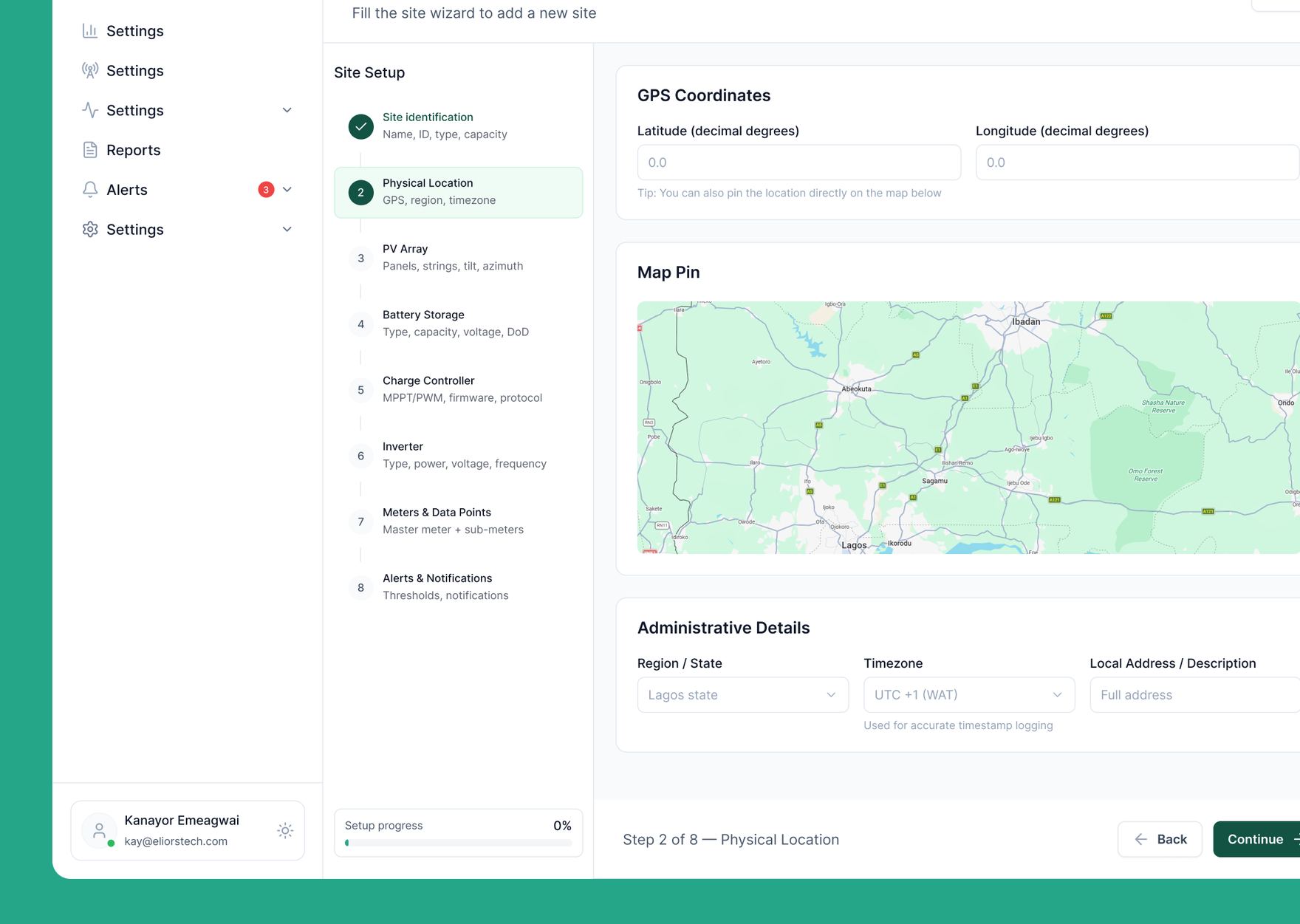
- Guided site setup: adding a new site walks through eight steps, identification, physical location with GPS and a map pin, PV array, battery storage, charge controller, inverter, meters, and alert thresholds, before the site can be published.
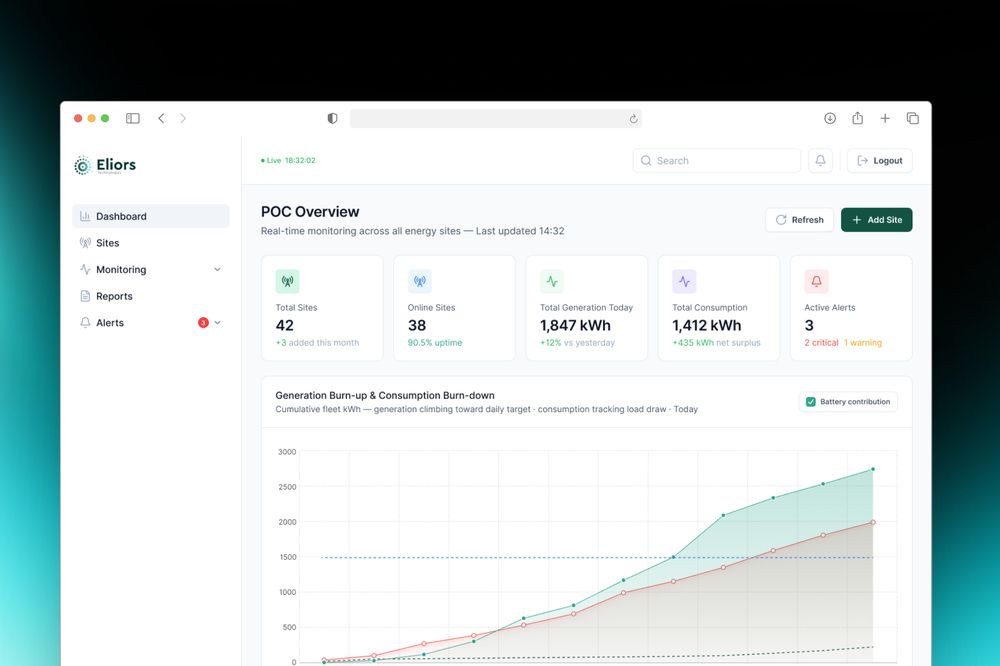
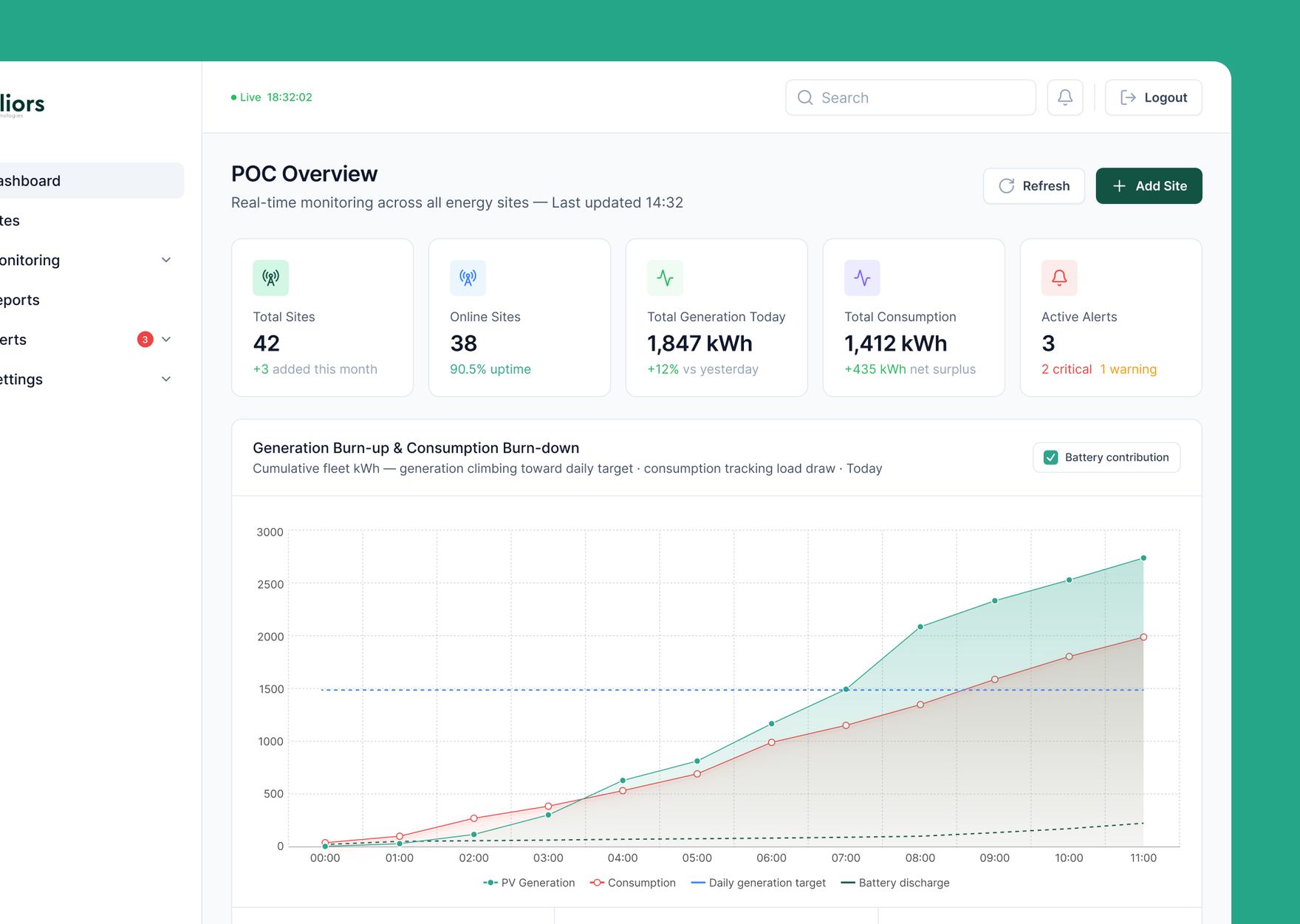
- Fleet status at a glance: total sites, sites currently online, generation and consumption for the day, and active alerts by severity sit on one overview.
- Generation against a target: a live chart tracks cumulative generation and consumption through the day against a daily target line, with battery discharge shown separately so a surplus or a shortfall is visible hours before it becomes a problem.
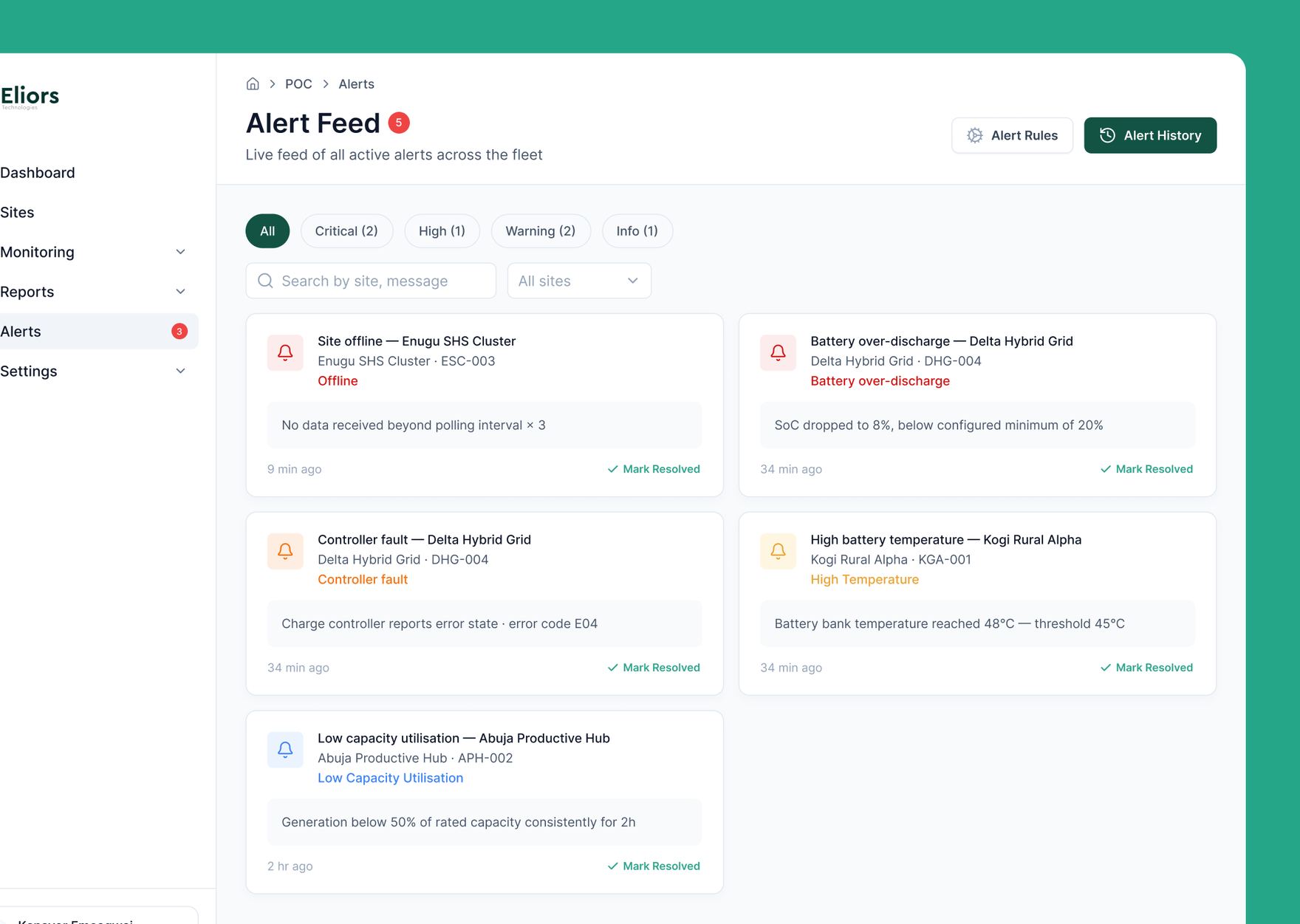
- A feed, not just a count: active alerts across the fleet sit in one filterable feed rather than a badge nobody clicks, a site going quiet, a battery dropping below its configured minimum, a controller reporting an error code, each in plain language with a severity tag and a resolve action, so a critical fault never gets buried under routine notices.
2. Customer & billing, one record
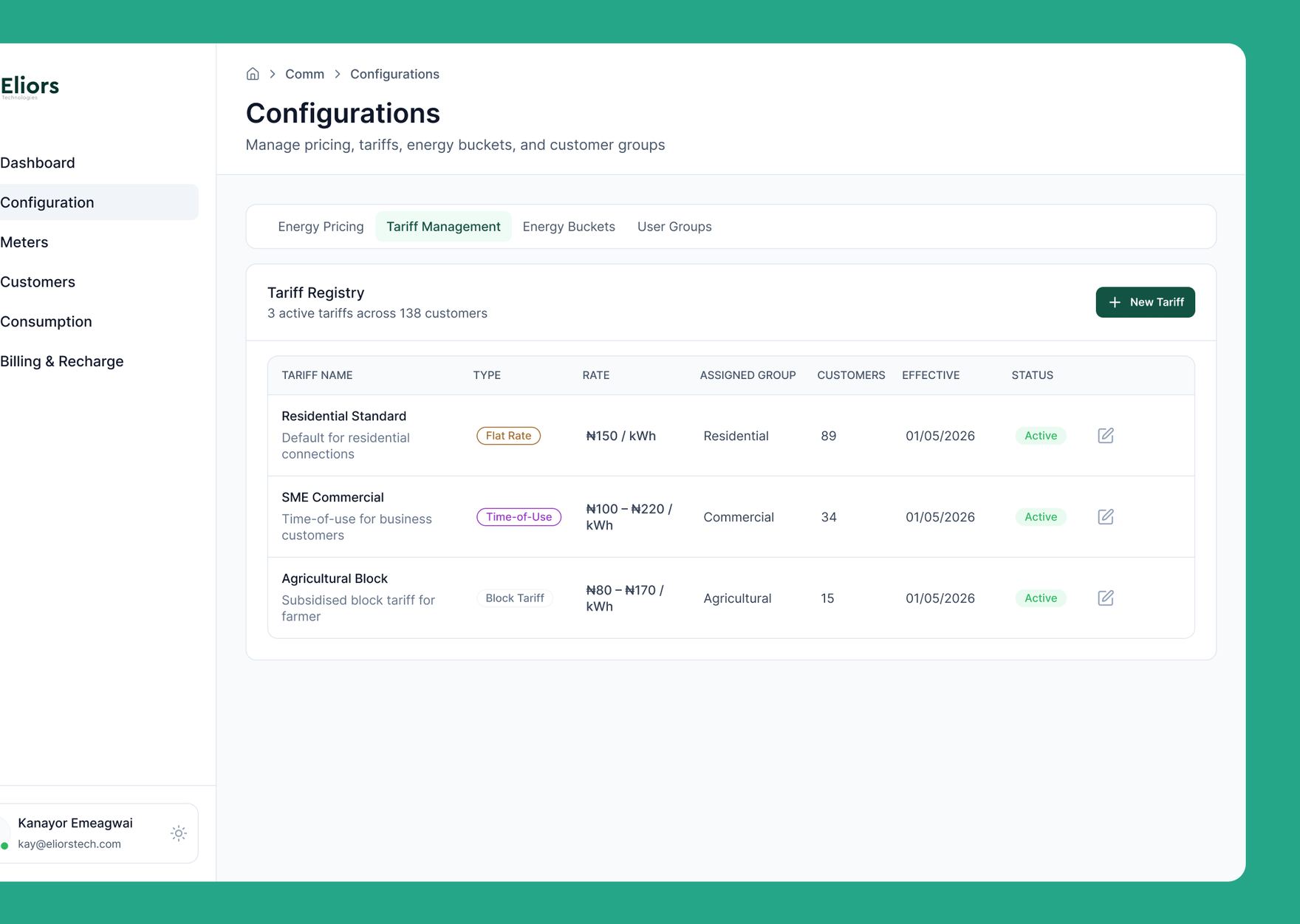
- Tariffs, set up once, applied consistently: flat rate, time-of-use, and block tariffs each get their own rate structure and assigned customer group in a central registry, so an agent enrolling a farmer under the agricultural block tariff is picking from a rate that already governs 15 other customers, not negotiating one on the spot.
- Guided onboarding: a new customer moves through personal information, identity and address, account setup, and meter and tariff assignment as four distinct steps, so a customer, a meter, and a tariff link on day one instead of getting reconciled after the fact.
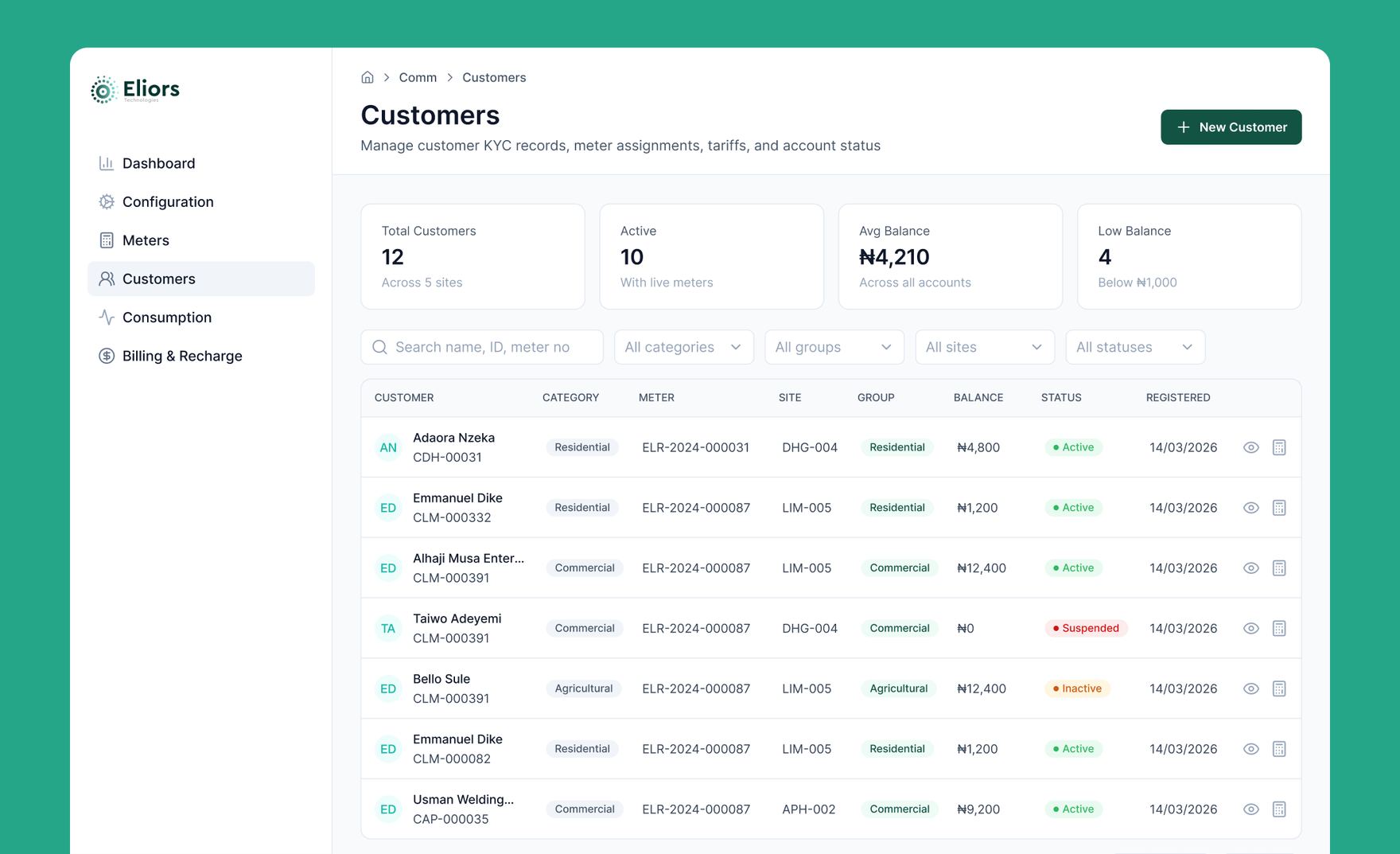
- One directory, every site: customers across every site sit in one table, filterable by category, group, and status, with balance and low-balance flags visible before a customer runs out of power rather than after.
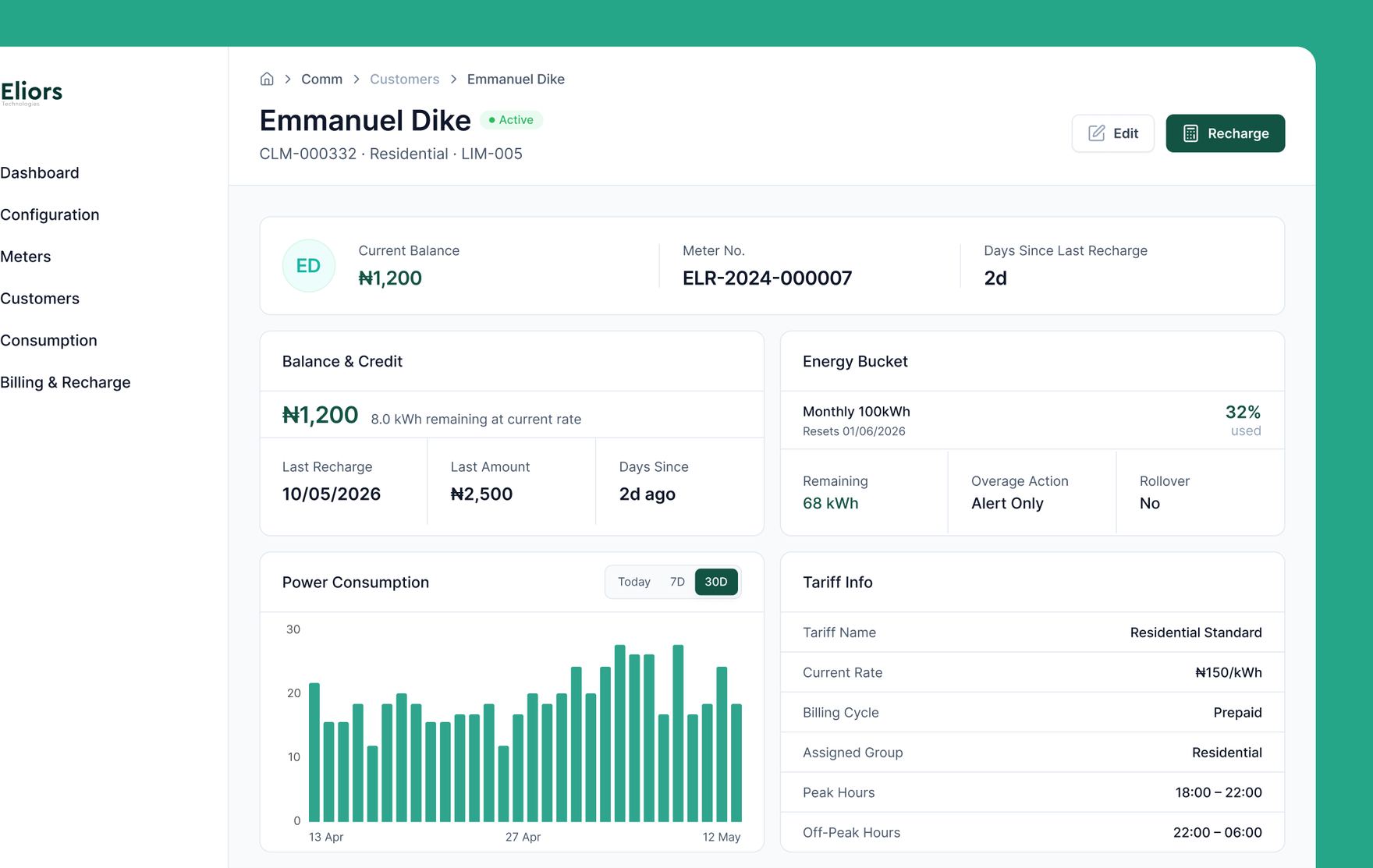
- One customer, complete picture: a single customer's page pulls balance, an energy bucket showing the monthly allocation and how much is left, a 30-day consumption trend, tariff details down to peak and off-peak hours, and live meter status onto one screen, so answering why a bill looks different this month doesn't take four separate lookups.
- A trail for every recharge: cash, mobile money, bank transfer, and agent recharges all land in one transaction log with a payment reference and a processed-by field, so a support call about a missing payment has one place to check.
Learnings
- Two operators, one meter record: the engineer monitoring plant health and the commercial team managing customer billing rarely look at the same screen, but they needed to share the same meter record. Keeping that record singular, rather than letting each team keep its own copy, prevented the two sides from drifting out of sync when a site's capacity changed.
- Enrollment quality determines support load later: a customer onboarded without a verified meter assignment doesn't cause a problem immediately, it becomes a support ticket months later when nobody can explain why a bill doesn't match usage. KYC and meter assignment needed to be the same step, not two.
- A balance number isn't the same as a trail: customers rarely dispute the amount on their balance. They dispute how it got there. Payment channel and reference turned out to matter as much as the total, if not more.
- Design for a grid that isn't always there: off-grid meters communicate over LoRa or GPRS, which means intermittent connectivity is the normal state, not the exception. The alert engine and site-status model were built around that from the start, rather than retrofitted after the happy path.